Remember your hospital's first EMR?
Hospital systems are seeing the same issues today with AI that they did with EMRs

When I was in school, using a word processor on a paper counted as cheating. A few years later, a professor handed my paper back and told me I was lazy for not running a spell check. The tool itself hadn’t changed. What changed was that a group of leaders had decided what it was for.
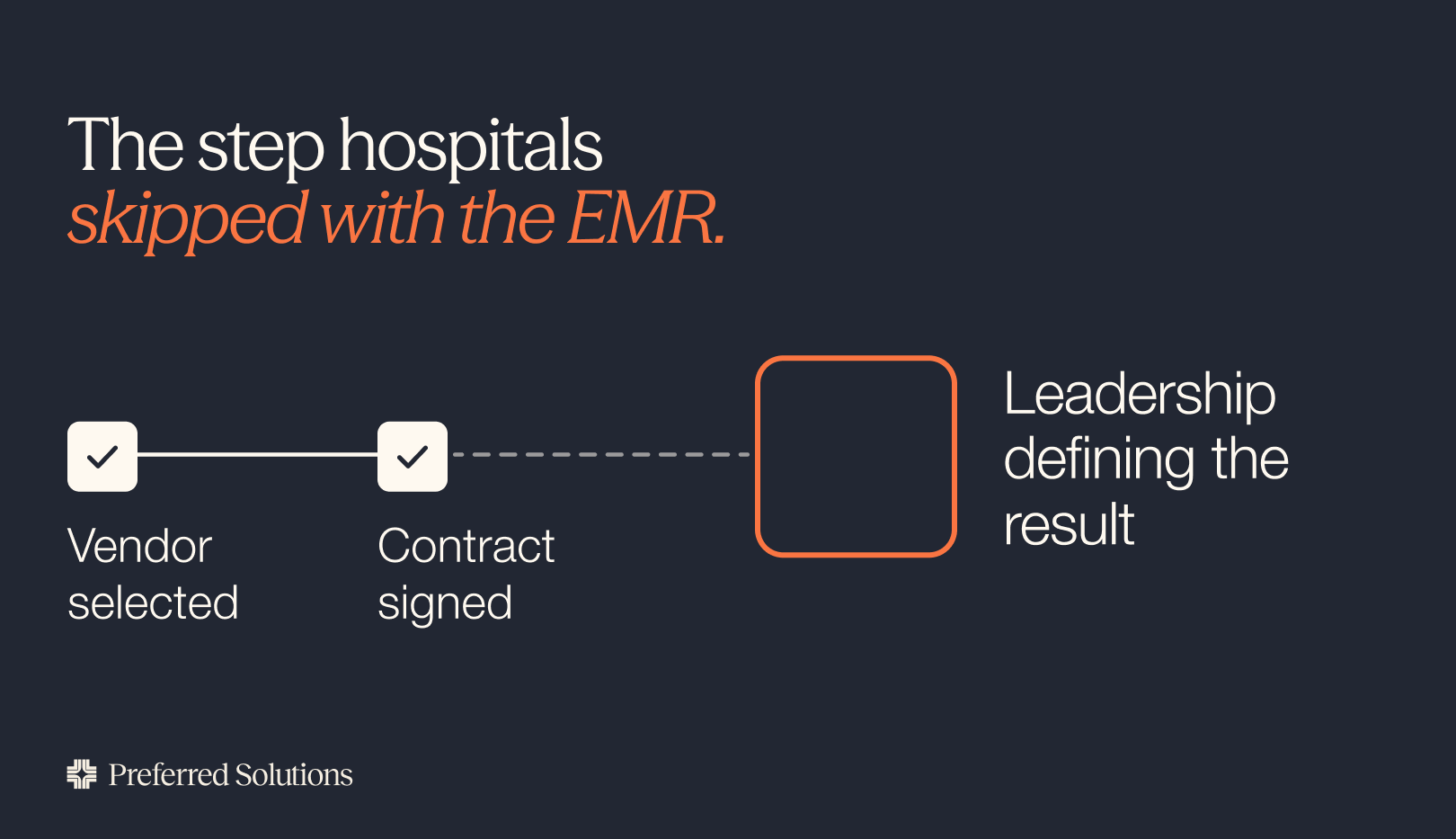
Hospitals made a far more expensive version of that mistake with the electronic medical record, and I lived through it. When hospitals began adopting it at a wide scale, nobody told us what it was supposed to accomplish. Everyone adapted around the EMR.
25 years ago, no hospital in this country had an IT department. Now every system has one, but it required one course-correction after another for years following initial EMR adoption. Most fixed problems a strategic plan at the top would have prevented at the start.
AI in Staffing Is a Leadership Decision
AI is arriving in staffing the same way it’s arriving in the rest of medicine. Whether your system adopts it is an easy decision. What your hospital wants to achieve with AI is not.
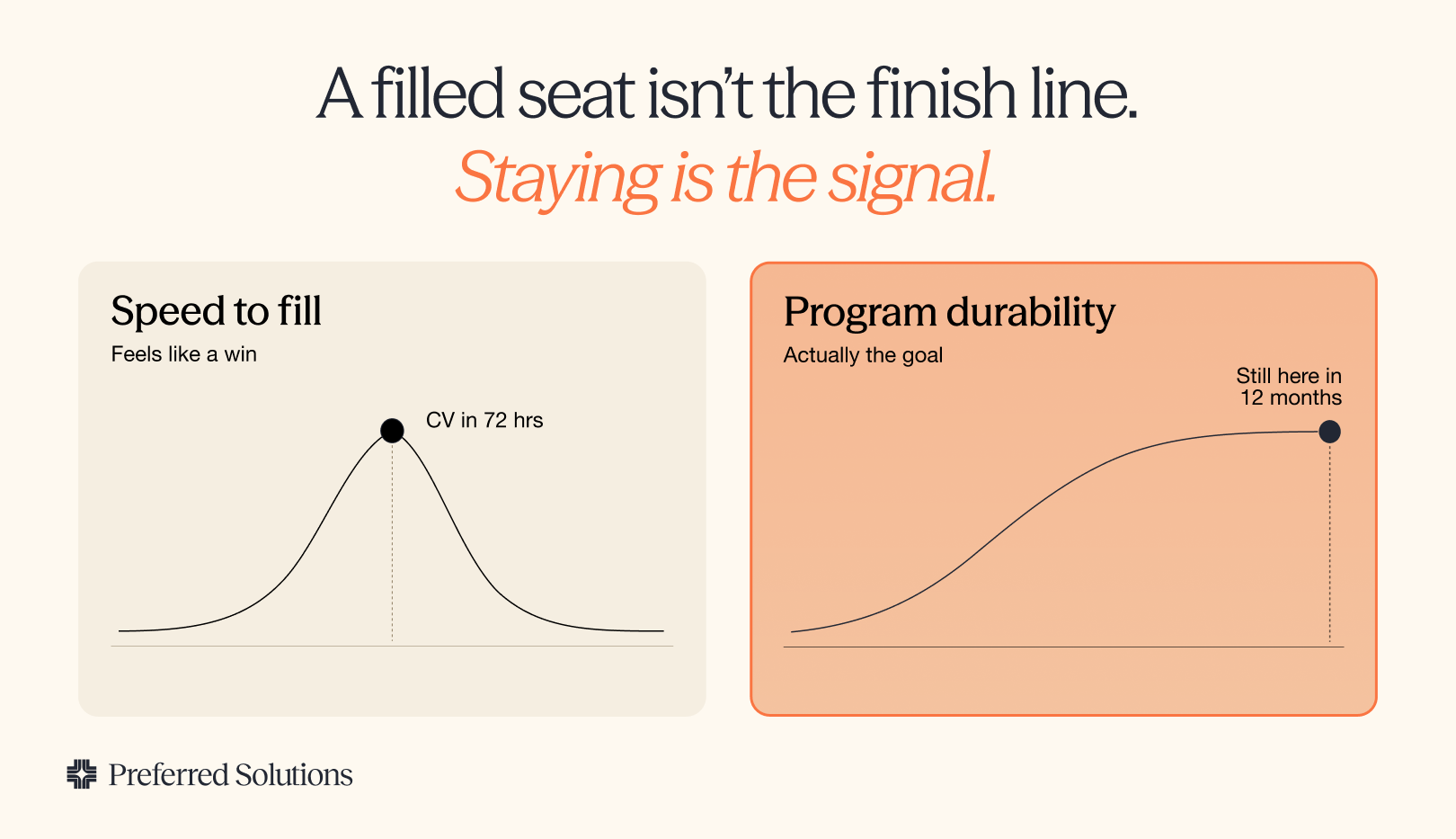
That decision belongs to leadership, and it should happen before a vendor’s rollout. Name the result you are after: fewer wrong-fit hires, or a service line that stops restarting every time a physician leaves. Then judge whether the tool gets you there. Skip this step, and the tool will optimize for whatever the vendor built it to measure. For VMS’s, this is almost always speed to fill.
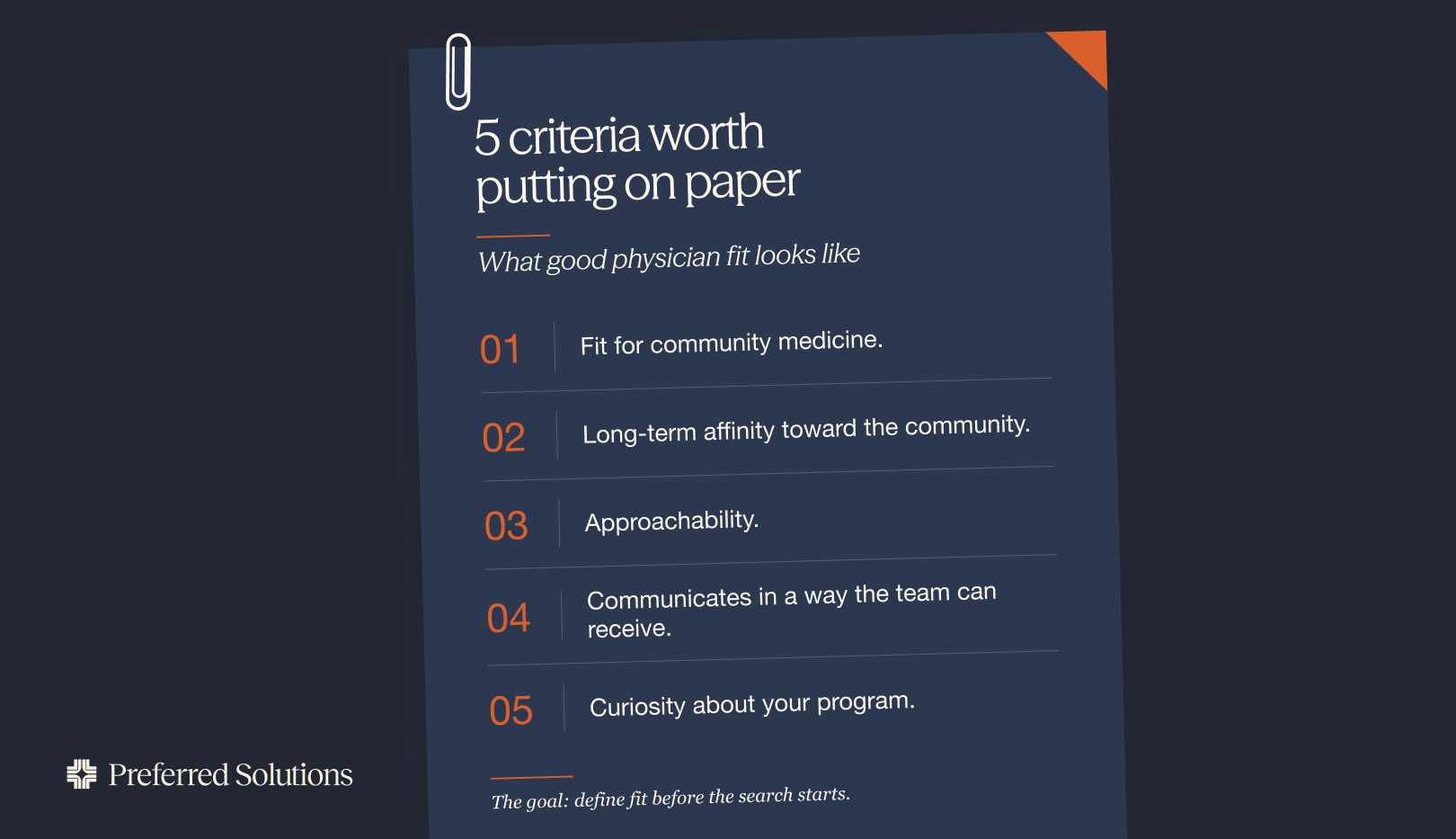
Fit is the number one reason a hospital rejects a placement. When a team turns a candidate down, they tell me the same thing: this person doesn't fit our team, they don’t fit our culture. No tool I have seen understands and vets for fit.
Fit is not a feeling. Before a search starts, I sit with your clinic directors and the staff who work alongside the physician every day, and we define what the right physician looks like on your team. Then we screen every candidate against that definition, through fourteen gates.
Optimizing for speed, and automating around fit, does not relieve the shortage. It reruns the same failed search faster. The wait lands on the patients, and you’re stuck in the same position six months in.
Where Automation Belongs, And Where It Stops
A vendor management system automates one thing: the contract. It keeps thousands of individual agreements out of legal review, which saves real money. It earns its place anywhere in your hospital’s workflow that the same agreement repeats, including food, supplies, disposables, and a good share of general staffing.
The line I draw sits at the physician core. No corporation I know of would hand its CEO, COO, CMO, or strategy officer search to a vendor management system and let it sub-vendor the work out. Physician hiring deserves that same standard, and hospitals that centralize it anyway make their own staffing shortage worse.
One wrong-fit placement does not stay contained. It impacts the entire hospital, the staff, and the patients in the community. The schedule slips, staff absorbs the friction, transfer requests increase, and referring physicians start sending patients elsewhere. Six to nine months later it reaches leadership, and the search starts over.
If you’re already locked into a VMS, you can still pull a service line out. The contract requires every staffing request to run through the VMS, and it usually bars the staffing firm from speaking with your team at all.
A carve-out writes an exclusion into that language. Pull cardiology out, work directly with a partner on that line, and your program leaders are back in the room with the people sourcing for them.
Where the Time Back Should Go
Use automation for the work that repeats. Reserve your team’s expertise for defining what fit means for your department and the community it serves. Your definition of fit is what determines how long a physician stays.
Your executive team and the clinicians, nursing staff, and APPs who work alongside your physicians must do the work of defining fit. It determines the working relationship that best suits your team and your community. Whether a physician fits determines whether the team will bring their concerns to them. Whether the front desk trusts the schedule.
A good-fit physician walks in asking how the program works. A wrong-fit physician walks in telling the team what is wrong with it. In a VMS, the two are identical.
Where automation belongs: repeatable, high-volume work with no judgment attached. Contracting, paperwork, routing, scheduling logistics.
Where human partnership is a must: every decision about whether a specific physician fits a specific team.
Goals get lost once a project’s been underway for some time. It is up to your leadership team to evaluate whether the tools and automations you’re using today are fixing the right problems. Is the issue filling a seat quickly without accounting for fit? Or is the issue identifying physicians who help your program become more durable, make your staff happier, and improve patient access?
The Question Worth Asking
Who on your leadership team owns the result your next AI tool is supposed to deliver?
If nobody can name it, the tool will be graded on whatever it happens to produce. Run the same question at the vendor management system you already pay a percentage to: Who on your leadership team owns the result from the VMS when shifts go unfilled?
Your hospital adopted a major tool once without deciding its purpose up front. We start at the other end. We help you determine what the staffing model should improve and how we’ll get there—all while bringing costs down.