What the headlines are missing about physician staffing
These headlines only tell part of the story. None reveal what keeps a physician around long term.

How fast should it take to hire a physician?
Some trade coverage this year answers with three different headlines:
#1: CHG acquired a vendor-neutral VMS and MSPs account for 38% of AP staffing revenue → Headline shows a rise in centralized physician hiring and emphasis on speed of hiring.
#2: SIA data says more than half of hospitals maintaining or growing their locums program → Headline shows an increased need for flexible staffing and greater understanding of the value. (An immediate, poor-fit W-2 hire that doesn’t last is costly.)
#3: SIA also shows physician interest in locums at a 10-year high → There is a disconnect between what physicians thought their career would be and the reality. Locums is helping them find fulfillment in communities that fit their values—before they transition to W-2.
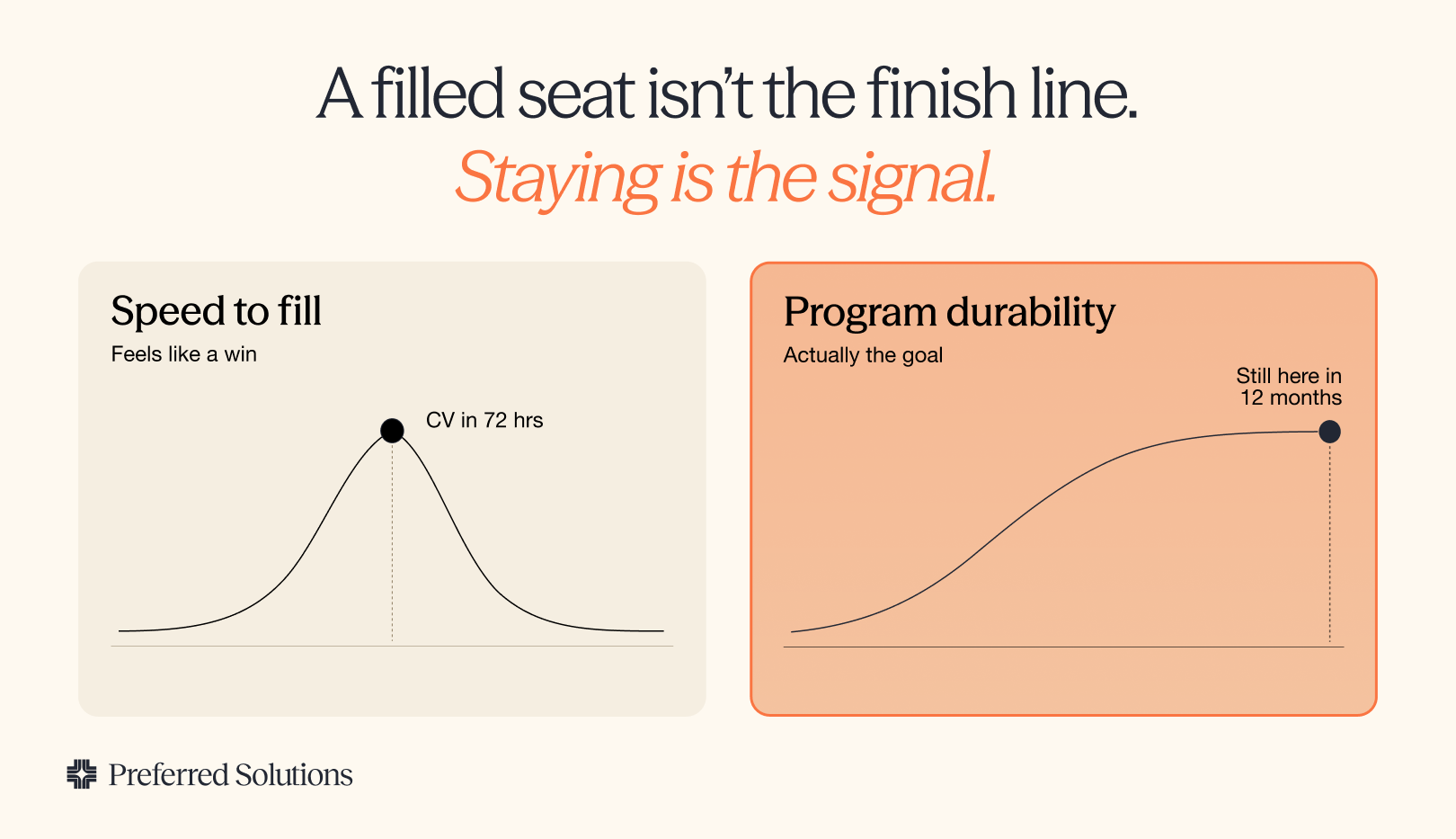
Speed is the common answer to the staffing crisis across most headlines, but none approach it with the right question: “Will this physician stay?” Turnover is inevitable due to the widespread shortages we anticipate, so how can hospitals build systems that outlast an individual physician’s tenure and that work better with the ebbs and flows?
#1: The Market Is Consolidating Around Speed
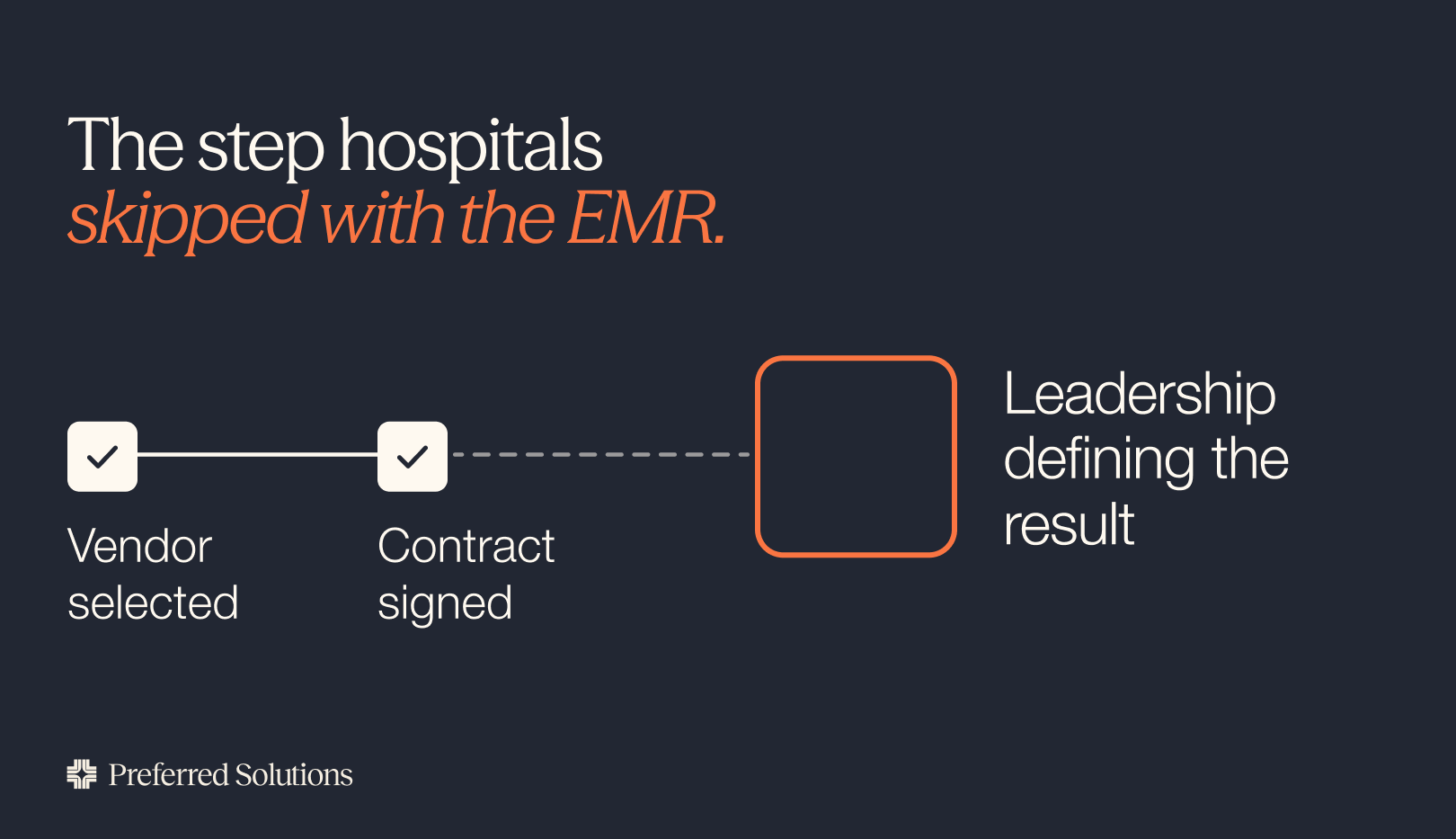
Trade coverage points to consolidation: CHG picked up a vendor-neutral VMS, and MSPs are moving more of the pipeline through automated contracting. Together, they're presented as proof that speed and automation are winning in the market. A VMS really only automates one thing, and that’s the contract.
This kind of consolidation only tracks how many contracts run through a vendor. They don’t consider whether a physician stays.
A physician departure costs a hospital $500,000 to $1 million once recruiting and lost productivity are counted. The pressure to onboard AI and automation is high, but AI and automation cannot solve the issues your hospital is facing in staff turnover, patient access, and program durability. In some cases, it makes the problem worse.
When you use a VMS that optimizes for speed-to-fill, you’re simply getting a physician in the door. There is no vetting that the physician fits your culture or your community.
A VMS cuts any communication between you and the staffing firm. This leaves no room for a conversation around fit. A poor-fit physician ends up creating friction across the program. Ultimately, they leave or cause your nursing staff to transfer. Referring physicians stop sending your hospital their patients, and patient access worsens. Tolerating a bad-fit physician leads to increased turnover, which creates more open positions that are difficult to fill. Optimizing for speed risks the entire system falling apart.
I share the entire ripple effect here.
AI and automation can handle the contracts. It should never replace a human in the room discussing what fit means for your hospital. Redirect the hours you gain from automating your contracting toward the culture-fit conversation.
Identify whether a physician would still be part of your program within a year. Doing so will minimize repeat hiring cycles—saving you more time downstream and significantly improving the happiness of your team and your program’s durability.
#2: The Stigma Is Leftover From the Way the Market Used to Be
Becker's reports an ongoing stigma: that locums physicians aren't trusted, and that they're marginalized on medical staff. At the same time, more than half of hospitals plan to maintain or increase their locums use this year.
The stigma is leftover from a previous market structure that just doesn’t exist anymore. Hospitals used to be geographically locked into a small physician pool. This gave the local doctors high amounts of leverage.
Hospitals had no other options, but locums changed that. Now a hospital can bring in a qualified physician from anywhere, and the local physicians no longer have the exclusive position. JAMA and PubMed research on time-to-treatment and patient outcomes shows locums physicians performing at the same level as permanent staff.
What this stigma costs a hospital is eye-opening.
Two local physicians in one community were on call every other night. They were overworked, and they also started turning patients away. When the hospital raised the issue, they escalated the physicians’ pay to three times market rate. Performance and patient access never improved. Later, when the hospital brought in independent contractors at fair pay with flexible scheduling, they delivered better care from day one.
#3: Burnout Is Driving Physicians to Locum Work
Physician interest in locum work just hit a 10-year high, and 56% of physicians say they first heard about it from a colleague.
Physicians say schedule flexibility and burnout drive their decision. Burnout is not caused by long hours, the EMR, or insurance denials. Those are distractions from the real issue. Burnout comes from a misalignment of what a physician expected the job to be after 12-16 years of training, and what the day-to-day turned out to be.
A defined hospital shift gives a physician something continuous employment often doesn't: an end point. Physicians find fulfillment when they fit the culture and can give back to a community. A physician who's felt undervalued is rejuvenated by giving back to a community and feeling respected in their field.
It is not just about the flexibility of hours or location. As an independent contractor, better boundaries alleviate expectations on the hospital to change their culture and resolve issues of burnout. A better fit physician no longer restricted to one region enables physicians to find the hospital environments they prefer and prevent many of these issues altogether.
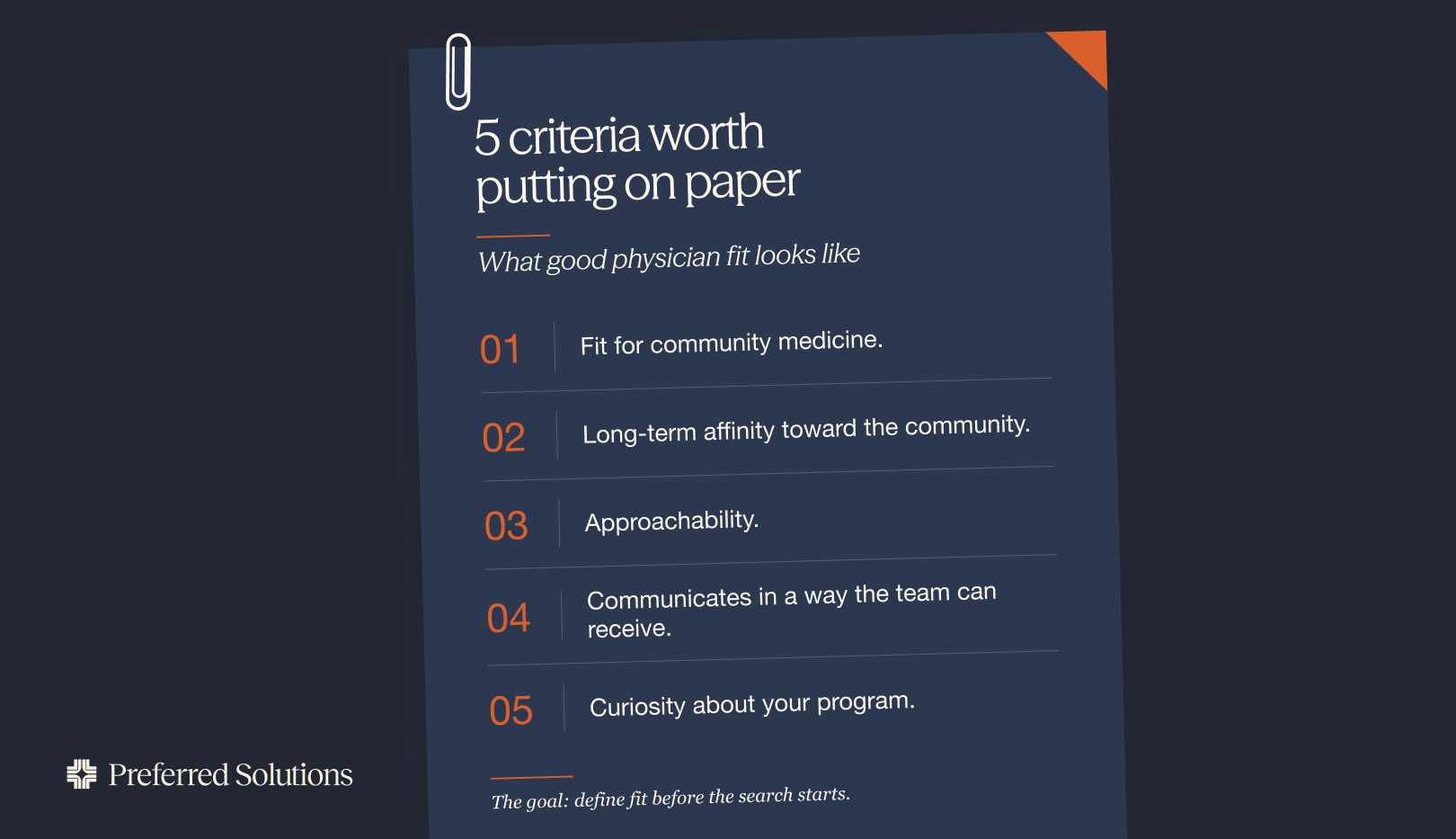
When a hospital defines and documents what fit looks like before a physician joins, the physician knows what they're walking into before their first day.
That's why a referral matters more than a recruiting message. A colleague isn't selling a placement. They're reporting whether a role delivered on what it promised, and whether the program is stable enough to be worth joining. That's the same standard Preferred Solutions vets for every program placement.
The Question Worth Asking
Where does speed show up first in your staffing decisions—in contracting, recruiting, vetting, and/or onboarding?
Evaluate whether it’s the best area for automation, or whether a human in the loop would solve the root issue.
A patient in a small Washington State community needed a specialist. The physician who fit best lived on the East Coast and trained at Harvard.
We placed the physician at the hospital in Washington. The patient never left home for care. It happened at their bedside, with family in the room, instead of three hours away over a mountain range.
These headlines are accurate but only tell part of the story. What they don't cover is the root cause behind staff turnover, lack of patient access, or a failed recruitment cycle on repeat.
That’s where fit comes in, and that’s what we do best.